
2 posts tagged with "Model Serving"

Serving ML models at scale

View All Tags

Run your own AI models, skip the machinery

· 12 min read
Rajesh RC
Founder

Every AI initiative starts with a choice: buy tokens from a frontier lab, or run models in your own cloud account.

For many teams, the lab API is the right answer. But renting is not an option when you need conditions a lab cannot sell you. You might need weights you own and can pin indefinitely, data that never leaves your infrastructure, predictable costs at scale, or independence from a model provider's roadmap.
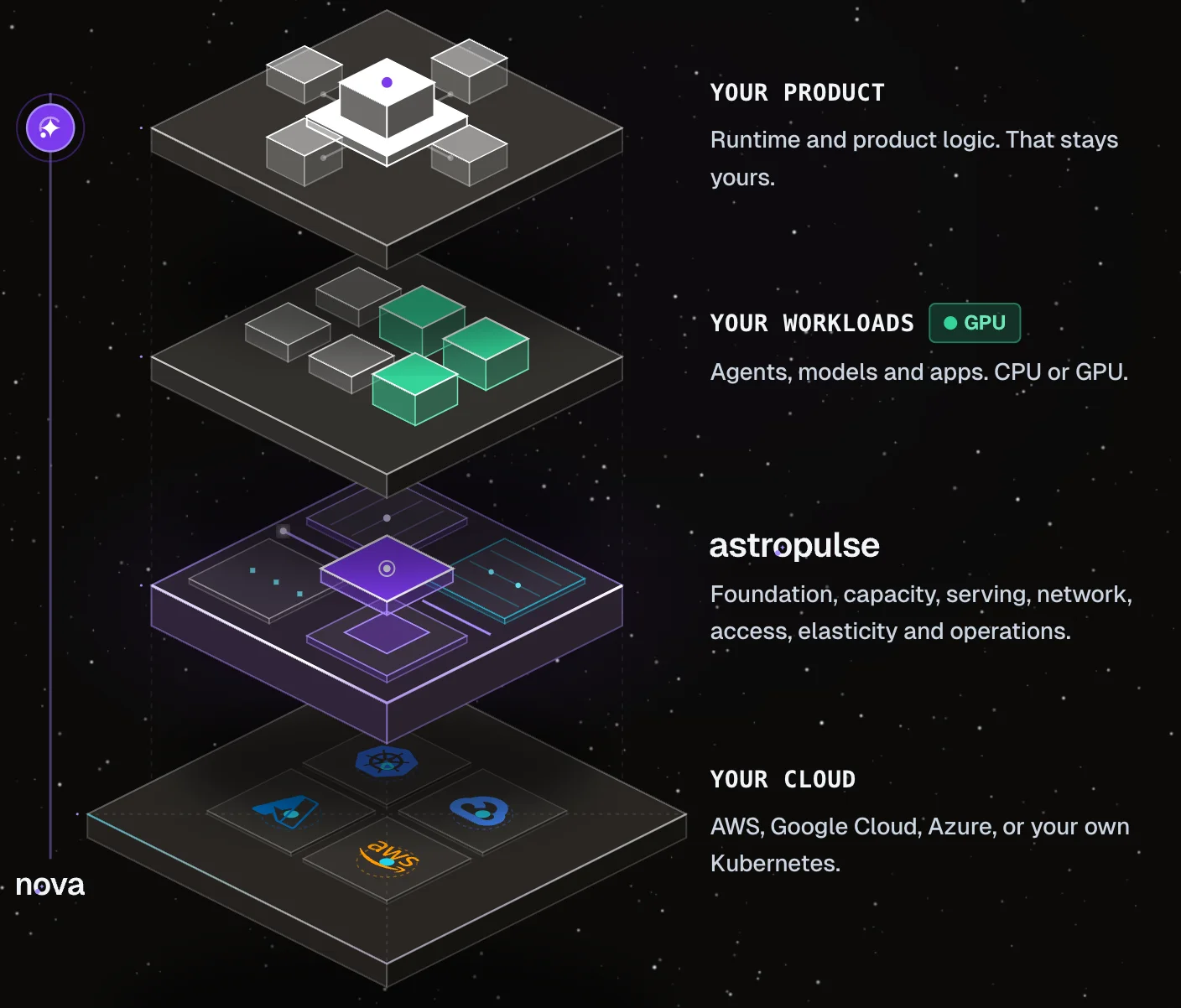
The AstroPulse stack: your product on top, your workloads (agents, models and apps on CPU or GPU) below it, AstroPulse in the middle running foundation, capacity, serving, network, access, elasticity and operations, and your cloud (AWS, Google Cloud, Azure or your own Kubernetes) at the base, with Nova alongside

Building AI Infrastructure: The Case for Specialized Models and AI Agents

· 51 min read
Rajesh RC
Founder
TL;DR - What You'll Learn

Building Enterprise AI Infrastructure: The Six Pillars, Specialized Models, and Emerging AI Agents

This deep-dive explores:

  • The six pillars required (Data Infrastructure, GPU Infrastructure, Training Pipeline, Model Serving, Supporting Services, Security & Governance)
  • Why specialized small models outperform foundation models for enterprises (85% better on domain tasks, 13-33x cheaper, data sovereignty)
  • How emerging AI agents are changing economics (5-10 person platform teams → 1-2 engineers + AI agents)
  • The open-source stack (KServe, vLLM, SGLang, TensorRT-LLM, MLflow, Kubeflow, DeepSpeed)
  • Why current tools are fragmented and operationally complex
  • The vision: Self-hosted infrastructure with managed-platform simplicity, powered by specialized models for business logic + AI agents for operations

Introduction​

Enterprises are discovering they can run powerful AI models on their own infrastructure, but building production AI infrastructure is significantly harder than application deployment.

This post breaks down the six interconnected systems required, why specialized small models outperform foundation models for enterprise use cases, how emerging AI agents are changing the economics, and the engineering trade-offs at every layer.

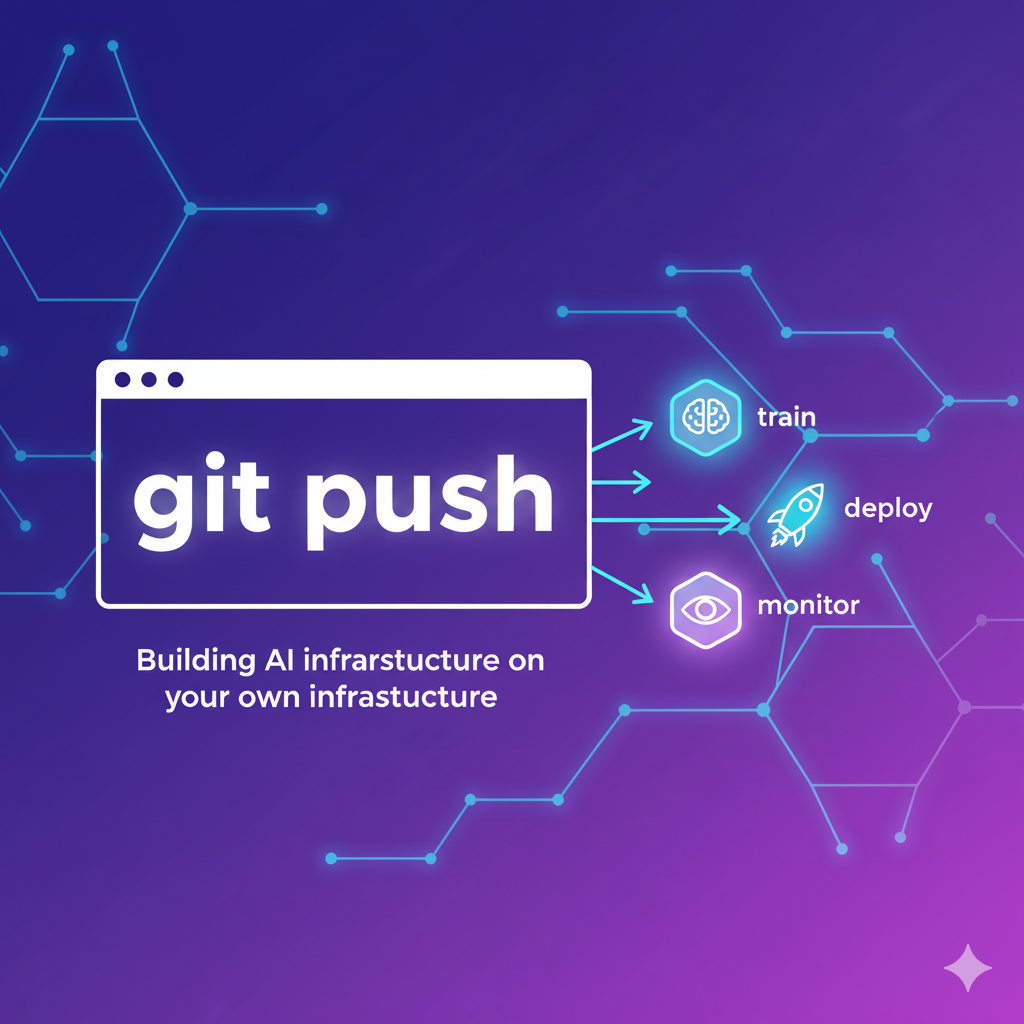
The Vision: Making AI infrastructure as simple as git push
📖 About This Guide

This is a comprehensive technical deep-dive. We explore the complete AI infrastructure landscape, from why enterprises build their own platforms to the six pillars required and the open-source technologies available.

  • 🎯 Looking for specific topics? Use the navigation guide below to jump to what you need
  • 📚 Want to understand the full picture? Read through. It is structured as a comprehensive exploration of AI infrastructure challenges and solutions