
4 posts tagged with "AI SRE"

AI site reliability engineering and agentic incident response

View All Tags

Run your own AI models, skip the machinery

· 12 min read
Rajesh RC
Founder

Every AI initiative starts with a choice: buy tokens from a frontier lab, or run models in your own cloud account.

For many teams, the lab API is the right answer. But renting is not an option when you need conditions a lab cannot sell you. You might need weights you own and can pin indefinitely, data that never leaves your infrastructure, predictable costs at scale, or independence from a model provider's roadmap.
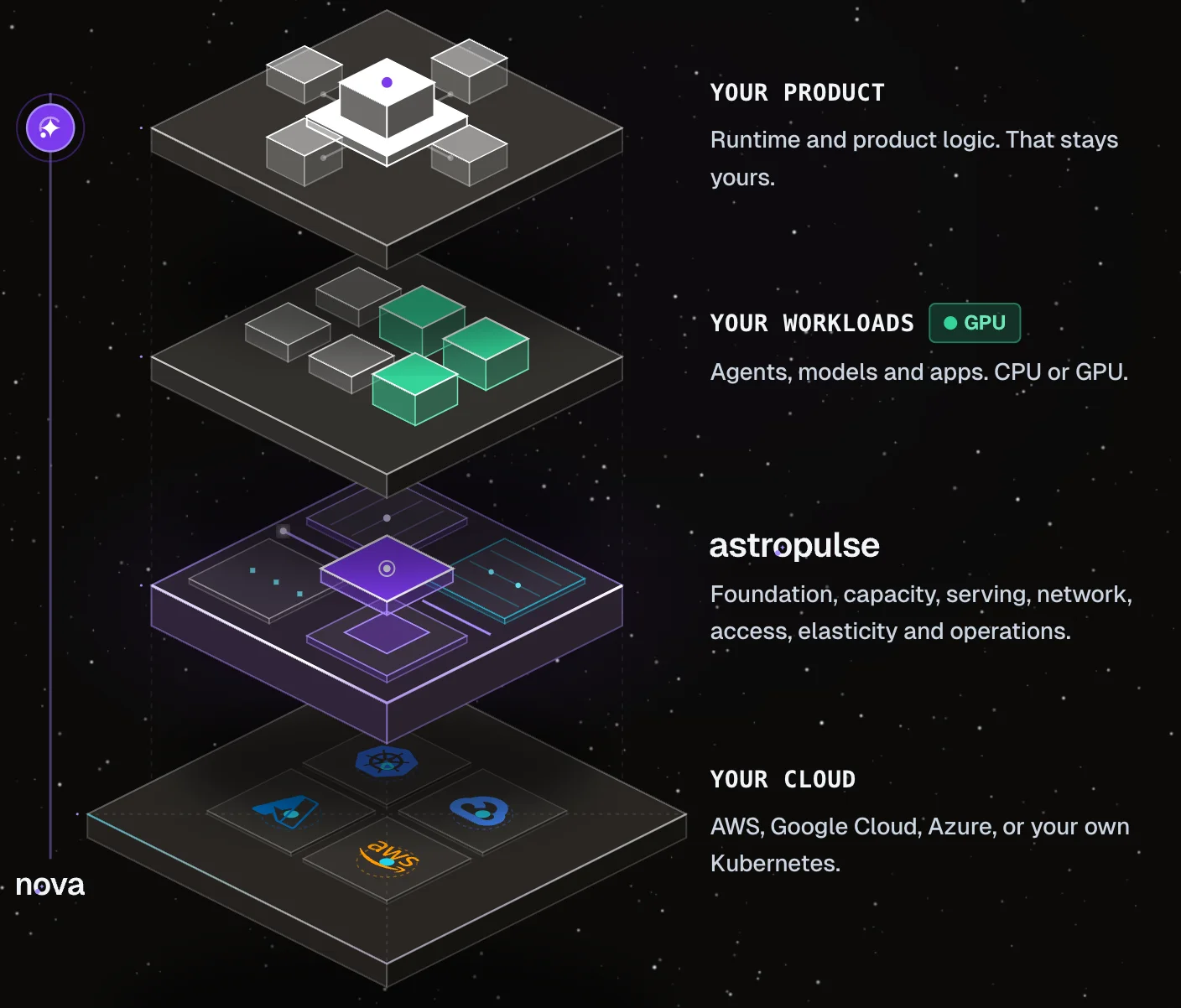
The AstroPulse stack: your product on top, your workloads (agents, models and apps on CPU or GPU) below it, AstroPulse in the middle running foundation, capacity, serving, network, access, elasticity and operations, and your cloud (AWS, Google Cloud, Azure or your own Kubernetes) at the base, with Nova alongside

How Nova picks the right tool out of thousands

· 10 min read
Rajesh RC
Founder
The thesis

At scale, search finds the tools. Judgment picks one.

With thousands of tools, getting the right one into a list of 100 is cheap. Getting it into the 5 the model sees, and knowing when none fits, is the hard part. A score that tracks the outcome is what lets the control layer act instead of guess.

Nova is our AI platform engineer. It does Day 1 work, building and shipping infrastructure, and Day 2 work, running it: scaling, upgrades and incidents, where it acts as an AI SRE. Either way it works through skills: its own, plus every MCP server an organization connects. Connect a few observability tools, source control, a cloud account and some internal servers, and the catalog is thousands of tools. On every turn Nova has to put the handful that fits in front of the model.

This post is the engineering behind that: the pipeline, what each step was worth on a public benchmark, what did not work, and how to reproduce it.

The AI SRE Race Is Running the Wrong Way

· 7 min read
Rajesh RC
Founder
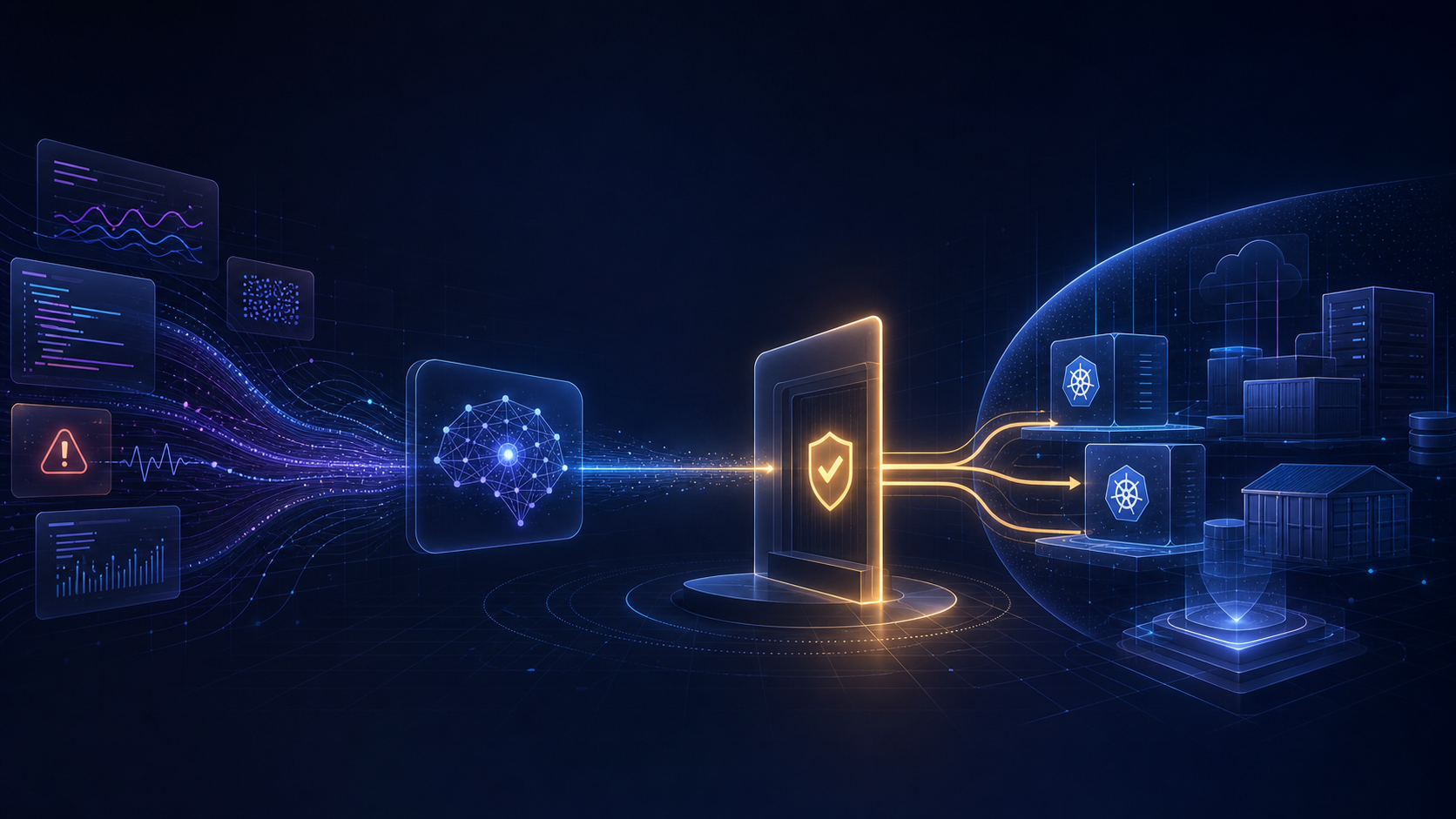
AI diagnosis flowing through a governed approval gate into production infrastructure
The thesis

Diagnosis is a commodity. Trust is the product.

The AI SRE race will not be won by the agent that diagnoses fastest. It will be won by the system that operators trust enough to grant write access.

A personal note on where AI for operations is actually heading.

Over the past year a new category filled up fast. Depending on how you count, there are now more than a dozen credible tools that call themselves AI SREs. I have watched the space closely, partly because we are building in it, and partly because the speed of convergence is genuinely interesting.

Here is what nearly all of them do. They connect to your telemetry, your code, and your incident tooling. They correlate logs, metrics, and traces. When an alert fires, they form hypotheses, test them against the evidence, and post a likely root cause into Slack, often in under a minute. This is real progress. A few years ago none of it worked. Today most of it does.

Phase one is real

Diagnosis is real progress. But it is just phase one.

How We Designed Nova's Investigation Engine: Lessons from SRE at Scale

· 8 min read
Rajesh RC
Founder

When something breaks in production at an odd hour, the person on call has to do three things at once: understand what is happening, decide what to do about it, and be able to explain all of it the next day. Most AI incident tools help with at most one of these. They either give you more data to read, or they take action you cannot see and cannot account for afterward.

We spent the last several months building Nova's investigation engine around that gap. This post is about how we designed it, the models we borrowed from, and the trade-offs we made along the way.